


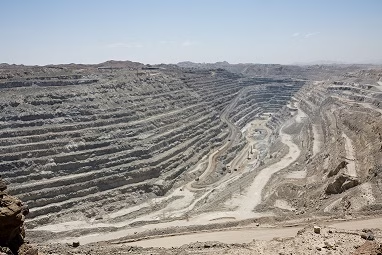
The Chamber of Mines’ latest update for January reveals a strong start to the year for the mining sector, fueled by high commodity prices and an increase in global demand for strategic minerals.

This performance is a key driver for the national economy, aligning with the 2026/27 National Budget projections.

The 2026/27 National Budget projects real gross domestic product to grow by 3.1% in 2026.
The report notes that the growth is partly supported by the mining sector, particularly uranium and gold, bolstering export earnings and tax revenues.
According to the report, corporate income tax receipts from diamond mining companies show a short-term contraction, declining from the N$239.1 million received in 2024/25 to an estimated N$74.3 million in the 2025/26 financial year, and gradually recover to N$101.9 million in 2026/27.
In contrast, other mining subsectors, primarily uranium, gold, and base metals, with gold as the main driver, have become the dominant contributors to government revenue from the mining industry. Corporate income tax from non-diamond mining is estimated to have increased by 54%, from N$2.887 billion in 2024/25 to N$4.443 billion in the 2025/26 financial year.
Global commodity markets provided mixed signals in January. Gold prices remained highly volatile. On a year-on-year basis, prices increased by 75% and by 10% month-on-month. However, the sentiment shifted following U.S. President Donald Trump announcing Kevin Warsh as the next Reserve Federal chair, triggering a sharp correction in gold markets, with prices falling from US$5,500 per troy ounce to approximately US$4,700 per troy ounce.
Conversely, uranium prices strengthened, averaging US$86.57 per pound. The increase reflected continued positive sentiment in the uranium market, supported by strong nuclear fuel demand, tightening global supply conditions, and increased long-term contracting by utilities seeking to secure fuel for expanding nuclear energy programmes.
Furthermore, copper and tin prices recorded strong gains, supported by demand linked to electrification and renewable energy infrastructure. Copper prices now trade above the US$10,000 per metric tonne, while tin prices rebounded strongly, surpassing previous cyclical highs and nearing the US$50,000 per metric tonne.
Zinc prices also strengthened, averaging around the US$3,000 – 3,200 per metric tonne range but remaining below its 2022 peak of above US$4,000 per metric tonne. Lead prices increased by 4% year-on-year, indicating some improvement in global lead market conditions, and by 3%, suggesting short-term upward momentum at the start of the year.
The diamond market remains under pressure due to weak global consumer demand, high inventories and continued competition from lab-grown diamonds, suggests continued pressure on diamond export revenues and fiscal receipts at the start of 2026. In January, the IDEX diamond price index averaged around 84 and 85 index points, reflecting continued weakness in the natural diamond market.
The report further notes that Namibia remains well-positioned to benefit from rising global demand for critical and strategic minerals, particularly uranium, as countries seek secure supply chains for energy transition technologies.
Despite positive market conditions, the update highlights several risks facing the sector, including increasing geopolitical tensions, uncertainty in global supply chains, and rising domestic cost pressures, particularly in electricity and fuel.
